Due to a quirk in the laws of gravity, in order for a body to be stable in its orbital path, it must have a counterweight - a gravitational antipode. On most scales this is inconsequential, but on the scale of planets and planetary nebulae it becomes evident.
About
Grave to Cradle is a sci-fi TTRPG, a collaborative game of exploration, crafting, and environmental restoration. The game is designed for group or solo play within richly developed sandboxes that span the planets and moons of our Solar System. The setting is one of messy futurism, full of bright colours and modular designs, where you navigate the vast and beautiful expanses between disparate research stations and settlements.
Setting
In the Solar System of Grave to Cradle, every planet has an antipodal twin. Humanity is scattered from shaded craters on Mercury to the frozen seas of Seidon's moons; sharing tea in the spice gardens of Kipris, and repairing motors across the cold deserts of Mars.
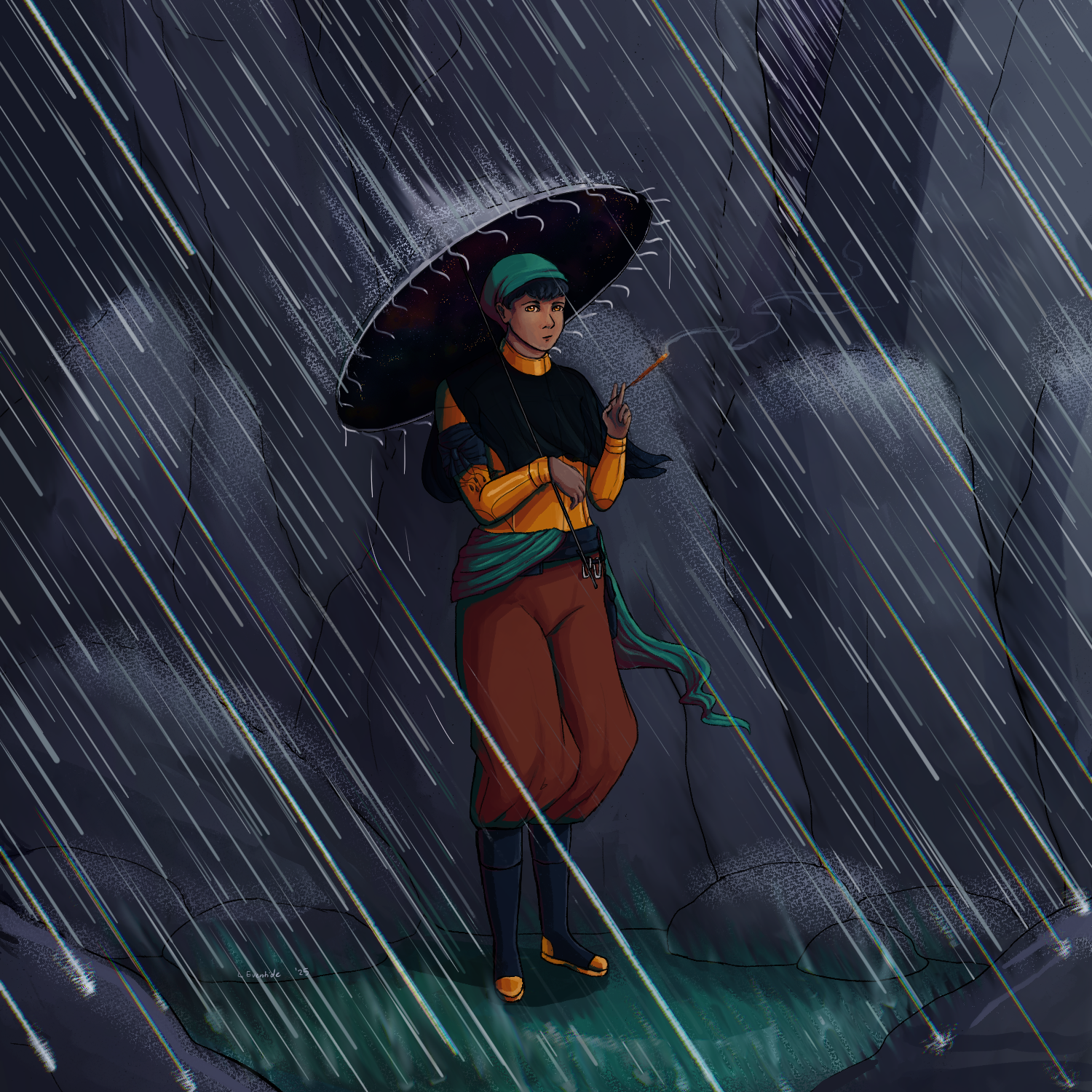
The signature of the setting is Ēmà - once known as Gaia - Earth's own twin. Ēmà is a planet of islands and storms, of old drilling platforms and alien wilds. The planet is rich in oxygen and water, with a strong magnetic field, and a steep axial tilt.
The orbital bodies of the Solar System are explored across different modules, inferred from characters and lore, punctuated by artwork, and built-upon by players.
Gameplay
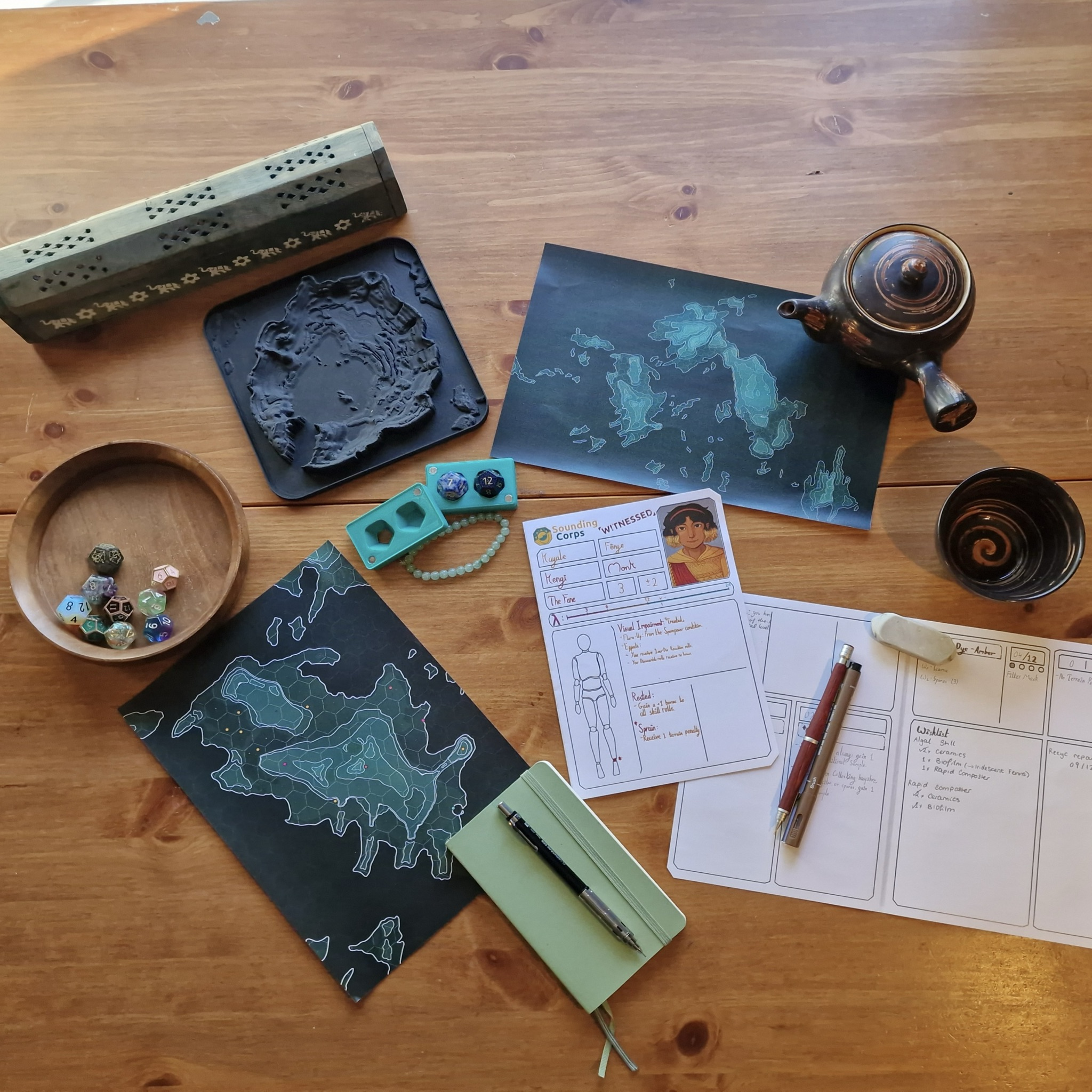
A full session of Grave to Cradle takes place over one ‘cycle’. On Earth, we can think of a cycle as a day - the time from one dawn to the next. On Ēmà, a cycle is the time from the end of one storm to the end of the next. Just as nights are spent resting on Earth, the storms of Ēmà see people taking shelter from the extreme conditions.
Gameplay takes place in the liminal calm between storms. Wake to repair your shelter’s hull, to maintain the turbines and solar plates. Set out to explore the local regions and gather resources, scavenging amongst graffiti in abandoned train depots - lost in sporeclouds and mist. Develop new equipment, new vehicles and modifications to your shelter. Restore the biodiversity of damaged ecosystems, and work with local people to accomplish goals far beyond any individual.
Playing Grave to Cradle
When playing Grave to Cradle solo, you can explore at your own pace. In the solitude of cycles, with only yourself to rely on when things go wrong, the game is as quietly immersive as reading a book and writing a journal. Even in solo play, you can invite other players to correspond with your character remotely; their transmissions relayed by tight-beam and satellite.
In co-operative play, you work with your team to accomplish your shared goals; overcoming each others' weaknesses, providing assistance for each others' long-term conditions, playing to the strengths of your team, and progressing much faster than in solo play.
In any team, one player can play as a unique kind of character called an Operator. Designed for newer players and highly experienced players, an Operator is a character that remains in the shelter and provides support to the rest of the team remotely, granting unique bonuses and abilities while focussing on the broader picture.